Complete Chemistry Study Guide: AP Chemistry Notes, Organic Mechanisms, General Chemistry Practice Problems & MCAT Questions
Chemistry is one of the most important subjects for students preparing for competitive exams and university entrance tests. Whether you are studying for AP Chemistry, preparing for the MCAT, or simply learning general chemistry concepts, having well-organized notes and practice questions is essential.
This guide covers AP Chemistry notes, organic chemistry reaction mechanisms, general chemistry practice problems, and MCAT chemistry questions to help students build a strong conceptual foundation.
1. AP Chemistry Notes (Complete Concept Review)
AP Chemistry is a college-level chemistry course designed for high school students. It focuses on fundamental chemical principles and problem-solving skills.
Important AP Chemistry Topics
Atomic Structure
Key concepts include:
- Atomic number and mass number
- Electron configuration
- Periodic trends
- Quantum numbers
Understanding these concepts helps explain how atoms behave during chemical reactions.
Chemical Bonding
Chemical bonding explains how atoms combine to form molecules.
Important bonding types:
- Ionic bonding
- Covalent bonding
- Metallic bonding
- Hydrogen bonding
Students should also understand:
- VSEPR theory
- Molecular geometry
- Hybridization
Thermodynamics
Thermodynamics studies energy changes in chemical reactions.
ΔG = ΔH − TΔS
If ΔG is negative, the reaction occurs spontaneously.
Key topics include:
- Enthalpy changes
- Entropy
- Gibbs free energy
- Calorimetry
Chemical Kinetics
Chemical kinetics studies the rate of chemical reactions.
Factors affecting reaction rates:
- Temperature
- Catalyst
- Concentration
- Surface area
Understanding rate laws is essential for AP chemistry exams.
2. Organic Chemistry Reaction Mechanisms
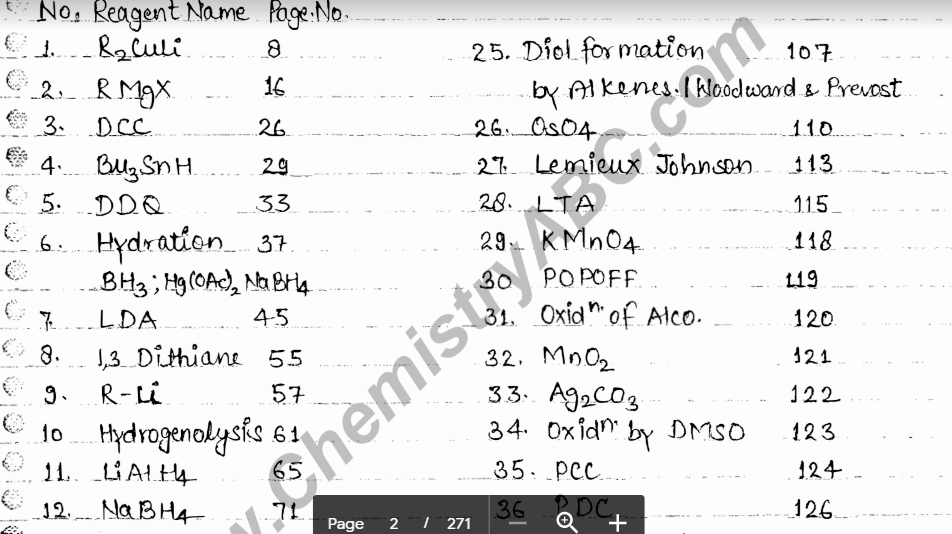
Organic chemistry mechanisms explain how chemical reactions occur at the molecular level. These mechanisms are very important for both AP Chemistry and MCAT preparation.
SN1 and SN2 Reactions
These are common substitution reactions in organic chemistry.
SN1 Reaction
Characteristics:
- Two-step mechanism
- Formation of carbocation intermediate
- Favored in polar protic solvents
SN2 Reaction
Characteristics:
- Single-step reaction
- Backside attack mechanism
- Inversion of configuration
Students should practice drawing curved arrows showing electron movement to understand reaction mechanisms clearly.
Elimination Reactions (E1 & E2)
Elimination reactions form alkenes.
E1 Reaction
- Two-step mechanism
- Carbocation intermediate
E2 Reaction
- Single-step mechanism
- Strong base required
Understanding these reactions is crucial for solving organic chemistry problems.
3. General Chemistry Practice Problems
Practicing numerical problems is essential to master chemistry concepts.
Ideal Gas Law
PV = nRT
Where:
- P = pressure
- V = volume
- n = number of moles
- R = gas constant
- T = temperature
Practice Question
A gas occupies 5 L at 2 atm and 300 K. Calculate the number of moles.
Solving such problems improves quantitative reasoning skills.
Stoichiometry Practice
Example problem:
Balance the reaction:
Fe + O₂ → Fe₂O₃
Balanced equation:
4Fe + 3O₂ → 2Fe₂O₃
Stoichiometry helps determine:
- Limiting reagents
- Theoretical yield
- Percent yield
4. MCAT Chemistry Questions
The MCAT is required for admission to medical schools in the United States. Chemistry is a major component of the exam.
MCAT chemistry includes:
- General chemistry
- Organic chemistry
- Biochemistry fundamentals
Example MCAT Question
Which factor increases the rate of a chemical reaction?
A. Decreasing temperature
B. Increasing activation energy
C. Adding a catalyst
D. Reducing concentration
Correct Answer: C. Adding a catalyst
Catalysts lower the activation energy, increasing the reaction rate.
Tips to Master Chemistry for AP and MCAT
✔ Focus on conceptual understanding rather than memorization
✔ Practice reaction mechanisms regularly
✔ Solve numerical problems daily
✔ Use diagrams and molecular structures
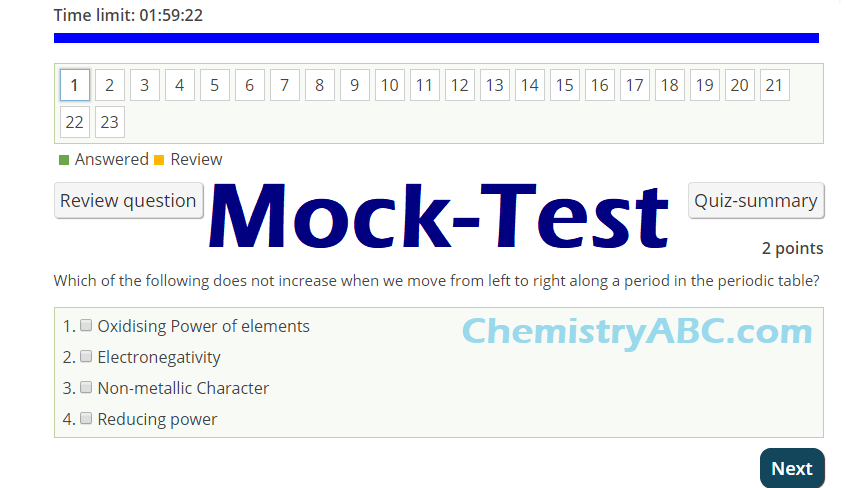
✔ Take mock tests to improve exam performance
Final Thoughts
Chemistry becomes much easier when students combine clear conceptual notes, reaction mechanisms, and regular practice questions. Whether preparing for AP Chemistry or the MCAT, consistent study and problem-solving practice are the keys to success.
This guide provides a strong foundation in AP chemistry notes, organic reaction mechanisms, general chemistry practice problems, and MCAT chemistry questions, helping students build confidence and perform better in exams.